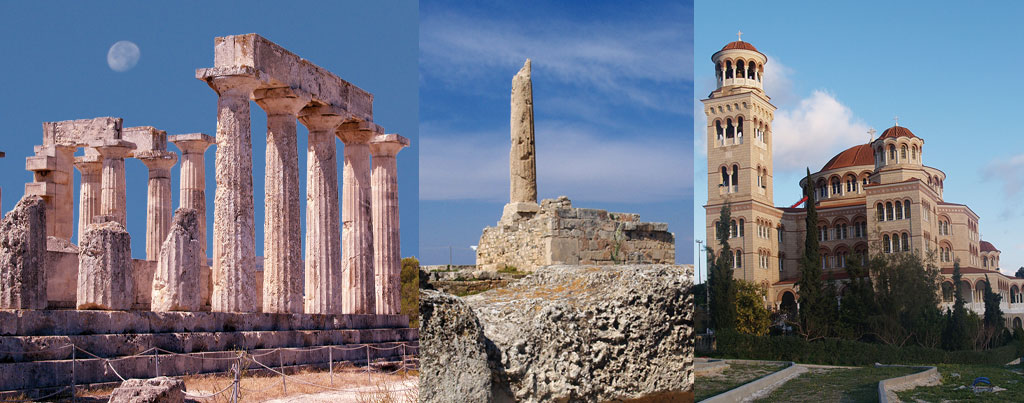
Temple of Apollo (Kolona) – Archeological Museum
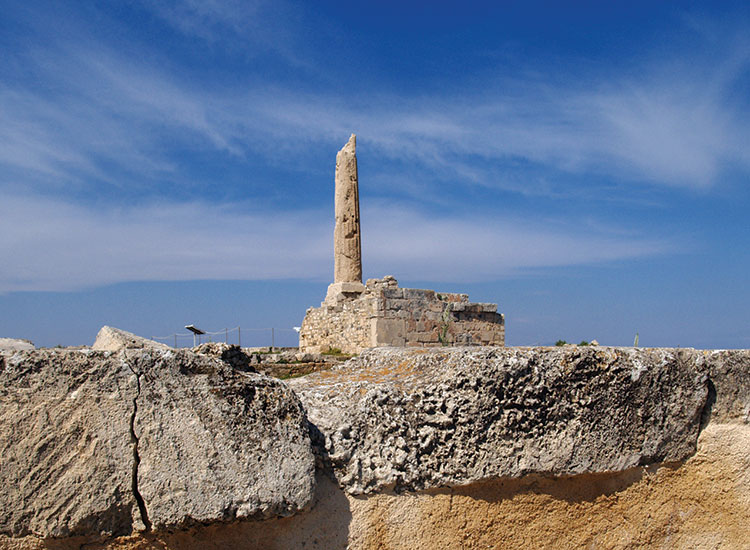
The hill of Kolona, a five-minute walk north of Aegina Town, was inhabited in prehistoric times through the classical period. Extensive walls and foundations have been discovered and excavations are still in progress. One erect column is all that remains of a Temple of Apollo built in the 6th century BC. During the excavations, a cemetery was discovered. Gold pieces of jewellery were found in its tombs and are now exhibited in the British Museum. At the entrance to the site is a mosaic floor surviving from a 7th century synagogue.
The Archaeological Museum is also at this site and contains a small but rich collection of pottery and sculpture from all periods of Aegina’s history. One of the most significant exhibits of the Archaeological Museum of Aegina is the statue of the Sphinx, a votive monument of the early classical period (460 BC), which was dedicated to the Temple of Apollo. It is an extraordinary sculpture, with a head of a woman and a body that is half eagle and half lion. The Sphinx of Aegina is from the 1903 Kolona excavations.
Aegina was the centre of one of the best known schools of sculpture during archaic times. Its evolution is illustrated by the sculptures of the pediment of the two archaic temples of Apollo, the two Sphinxes of the sanctuary and some reliefs (early votive column – archaic, post-archaic).
Opening hours:
Archeological site and Museum
Tuesday – Sunday, 10:00 – 17:30
T 22970 22248


Temple of Aphaia
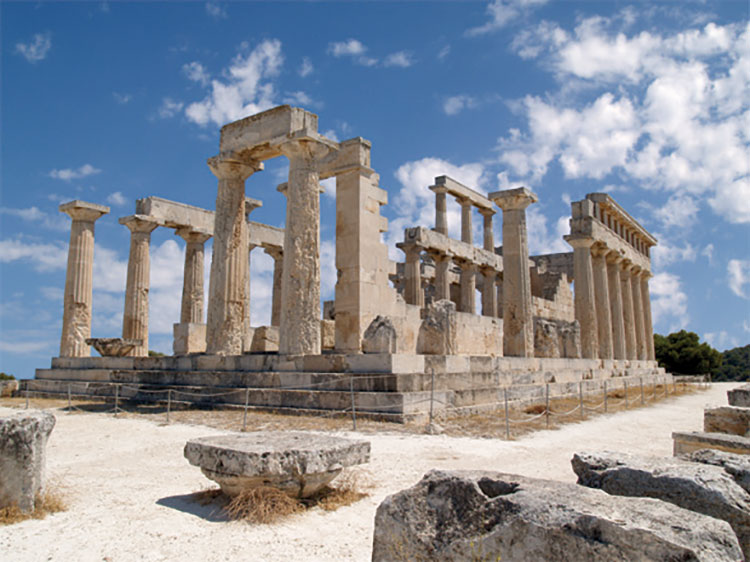
The Temple of Aphaia is one of the most beautiful classical temples in Greece and one of the oldest surviving. It stands on top of a pine-clad hill above Agia Marina from where you have a marvelous view of the mainland. The first temple on the site (700 BC) was dedicated to Aphaia, a deity from Crete. The Doric temple we see today was built about 490 BC of local porous sandstone, and it served as a model for the construction of the Parthenon and other temples in Greece, Asia and southern Italy. On a clear day, you can make out the Temple of Poseidon at Sounio, as well as the Acropolis of Athens. It is said that the three temples form an isosceles triangle (the sacred triangle of antiquity).
In 1811, the Englishman Cockerell and the German von Hallerstein, stole the sculptures of the pediments and smuggled them abroad, to sell them later to King Ludwig I of Bavaria. Today they are on display at the Glyptothek of Munich.
On the grounds of the Temple of Aphaia stands the Museum of Aphaia where everything that remains from the temple is housed. One of the most important artefacts is the reconstructed section of the pediment of the temple, the copy of goddess Athena and the votive tablet (560 BC) on which is written that the temple is dedicated to the goddess Aphaia.
Opening hours:
Archeological site: Daily, 8.00 – 20:00
Museum: Tuesday – Sunday, 9:00 – 16:00
T 22970 32398
Due to likely changes in the opening hours depending on the season, it is preferable to contact Archaeological Site directly.


Markellos Tower
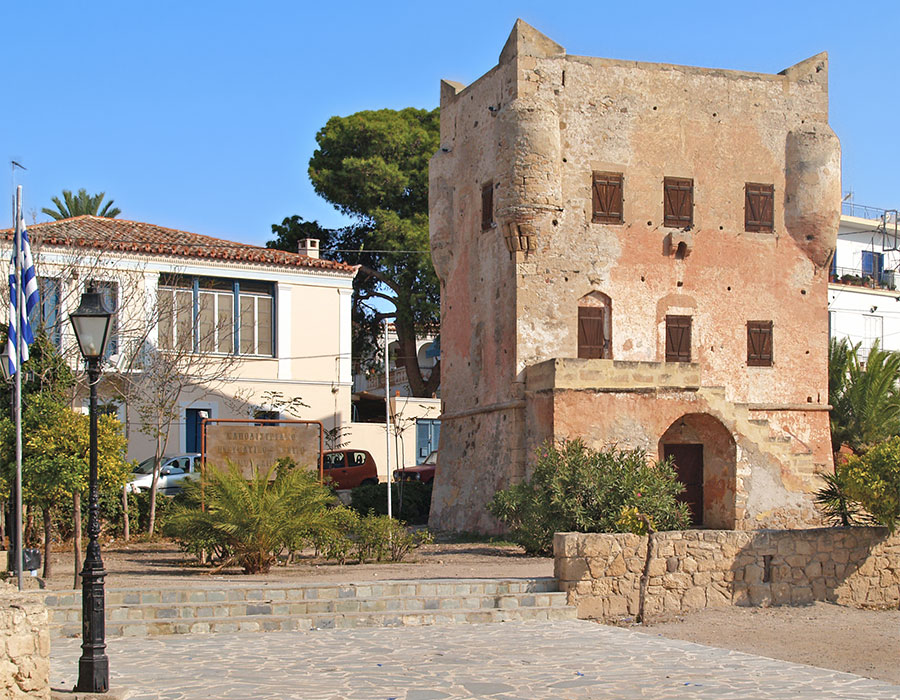
Markellos Tower architecturally refers to a Venetian watchtower built in the 17th century. It was likely part of the fortifications of the port of Aegina. In 1802, Spyridon Markellos, the Aeginetan provost and member of the Society of Friendship, renovated it, and since then, it has played an important role in the history of the Greek state.
Spyros Markellos, a fighter of the Greek Revolution and later a member of parliament, demonstrated admirable bravery in the struggle, serving under the command of Nikitaras and alongside Georgios Karaiskakis. During the Revolution, he hosted many fighters and politicians, both Greeks and foreigners, in his tower.
He gave the Tower to the first Greek anti-government committee from 1826 to 1828 (after the riots in Nafplio), and for a time, it housed the treasury of the Greek state.
From January 1828 until the end of 1829, Aegina served as the capital of the newly established state. During these years, the tower was used to accommodate government ministers such as Georgios Kountouriotis, Nikolaos Mekis, and Ioannis Koulleti. The temporary commander of Aegina, Psarian captain Andreas Giannitsis, also stayed there for a period.
Markellos Tower, now renovated, belongs to the Municipality of Aegina and houses the Municipality’s Kapodistrian Cultural Centre and the Spyros Alexiou Centre for Social Reflection. It is also utilized to host exhibitions of painting, sculpture, photography, and other artistic events.
Museum of History & Folklore
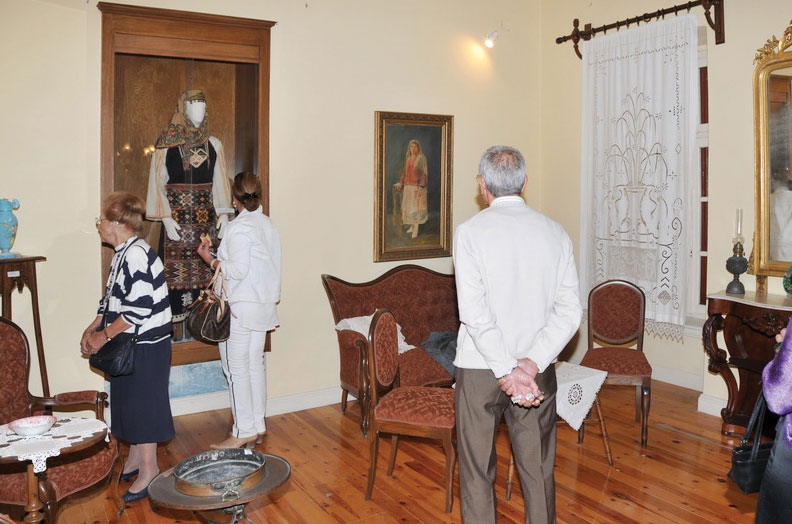
The Aegina Folklore Museum is housed in a 1828 neoclassical building, an endowment of Mrs Polimnia Iriotis to the Municipality of Aegina. Experience home and work life on the first floor of the building where the “Aegina House“ is set up. Authentic old furniture, paintings, costumes, lace and other features of domestic life are exhibited. On the ground floor, the “House of the Fisherman” features fishery and sponge fishing articles, while the “Cottage House” shows farm tools of the old days. The main hall of the ground floor and the courtyard host a wide range of temporary exhibitions, cultural events and lectures throughout the year.
Capralos Museum
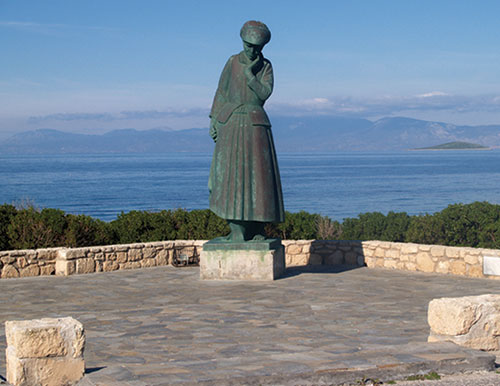
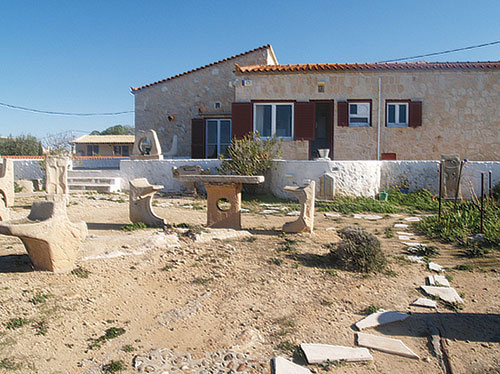
Christos Capralos was one of the greatest contemporary Greek sculptors. The museum lies on the northwestern side of Aegina, in the area of Plakakia, on the coastal road. Opposite the museum, next to the seashore, the bronze statue of Mother welcomes you. The museum is a pleasant 3 km walk from the harbour along the coastal road. The works exhibited in the museum are of marble, αeginean porous stone and wood; there are also exhibits of paintings, terracotta and ceramics.
Openings hours:
Wednesday – Friday, 08:30-15.30
Saturday & Sunday, 09:30-16:30
T 22970 22001


Agios Nektarios
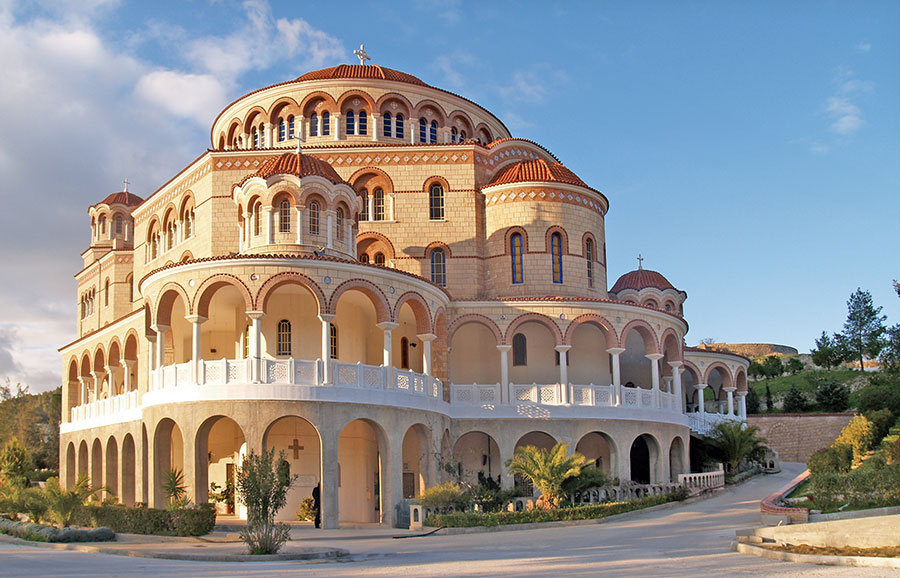
The church is named after its patron, Agios Nektarios, who died in 1920 and was canonised in 1961. His remains are preserved in the first chapel of the Agia Triada (Holy Trinity) Monastery, next to the church. Some nuns still live in the monastery which has been expanded with a huge guesthouse. Agios Nektarios church is located in the middle of the island, 6km from Aegina Town. The hill on which the monastery is built is named Xantos, from the word “xagnadema” (look out point), inviting you to survey the surrounding landscape. His memory is celebrated by the Church on 9 November, nameday of Nektarios.
Paleochora
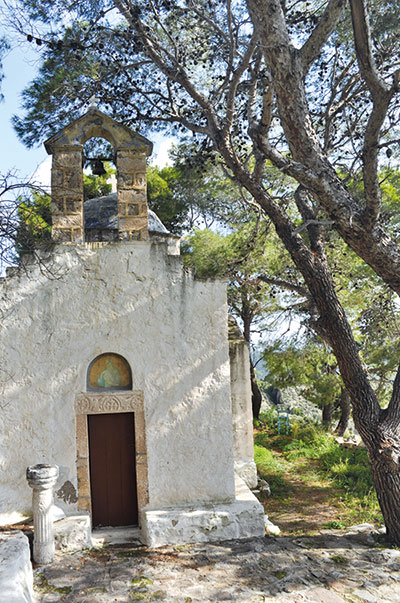
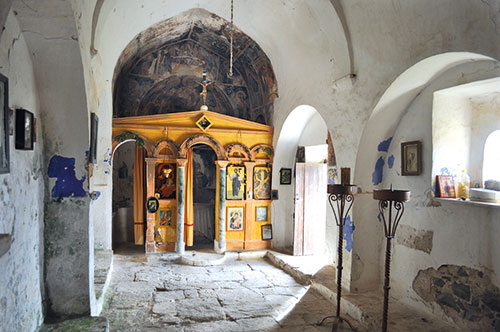
The hill of the medieval acropolis of Aegina, called Paleochora, rises just past the Agios Nektarios Church, on the left. Small scattered churches, 36 of the original 365, dot the hillside, alongside ruined cottages and towers. At an altitude of 355 metres, this is the “Palia Chora” (Old Town) of Aegina. Its history dates back to the 8th century AD, when fearing attack from the Venetians and Saracen pirates, the Aeginites left the coastal areas to seek refuge in the island’s interior. They remained there for 10 centuries. The churches and wall frescoes seen there are from various periods, from the 13th to the 18th centuries.


Ellanion Mount
In the center of the island, Mount Ellanion rises as the highest mountain of Aegina (532 m altitude). It is associated with the cult of Ellanios, the rainmaker Zeus, to whom Aeacus, the mythical first king of Aegina, prayed to end the drought that was affecting Greece.
At the top of the mountain, where the chapel of the prophet Elijah stands today, there was the oldest temple in Europe (built three generations before the Trojan War), dedicated to the worship of Zeus Ellanios. Large stones carved into the chapel are possibly remnants of that temple. Additionally, inside the church, there are trachites (volcanic rocks) that are ancient. At the top of the mountain, a Mycenaean settlement was discovered, and in the neighboring village of Lazarides, Mycenaean graves were found.
A notable aspect is the ancient doctrine (mentioned by Theophrastus). Once in Greece, a great drought occurred, and it hadn’t rained for three years as a punishment from the gods because Pelops had killed King Stymphalos. In desperation, the Greeks consulted the Oracle of Delphi, where Pythia told them that only if Aeacus prayed would the gods send the much-needed rain. The Greeks then sent an embassy to the Aeginetan king, begging him to pray. Aeacus climbed to the highest peak on the island and prayed to Zeus. The gods sent the rain even before Aeacus had finished his prayer, and to express his gratitude, Aeacus built a temple in honor of Zeus, the father of all Greeks, the Hellenic Zeus. Since then, the mountain has been named “Ellanion Mount,” dedicated to the god of rain, Zeus. People still believe today that when the mountain is covered with clouds, it will rain.
Elaionas (The Olive Grove)
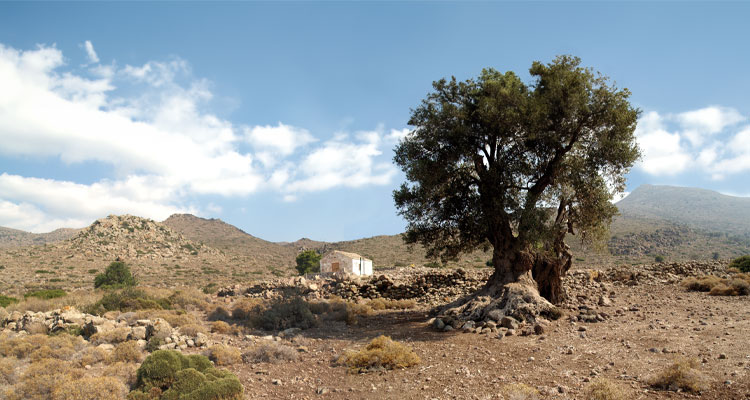
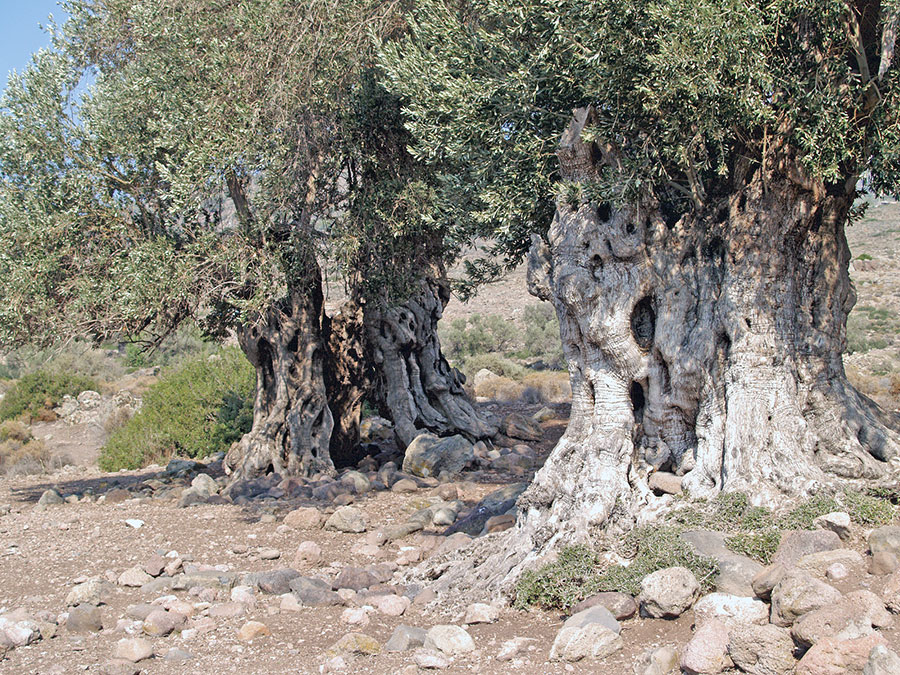
In the interior of Aegina, at the foot of Mount ‘Oros,’ lies the ancient Elaionas of the island, a place of rare beauty. Elaionas is protected by the surrounding mountains and gives the visitor the impression of a valley where the waters from the neighboring mountains converge. Due mainly to its lack of access to the sea, Elaionas has remained untouched by tourism. It is no coincidence that its existence is unknown, not only to many visitors of Aegina but also to a large part of the island’s inhabitants. As a result, the area has preserved its unique and rare beauty with ancient olive trees, weeds, wild rabbits, and streams that flow down and attempt to find their way to the neighboring bay of Marathon.
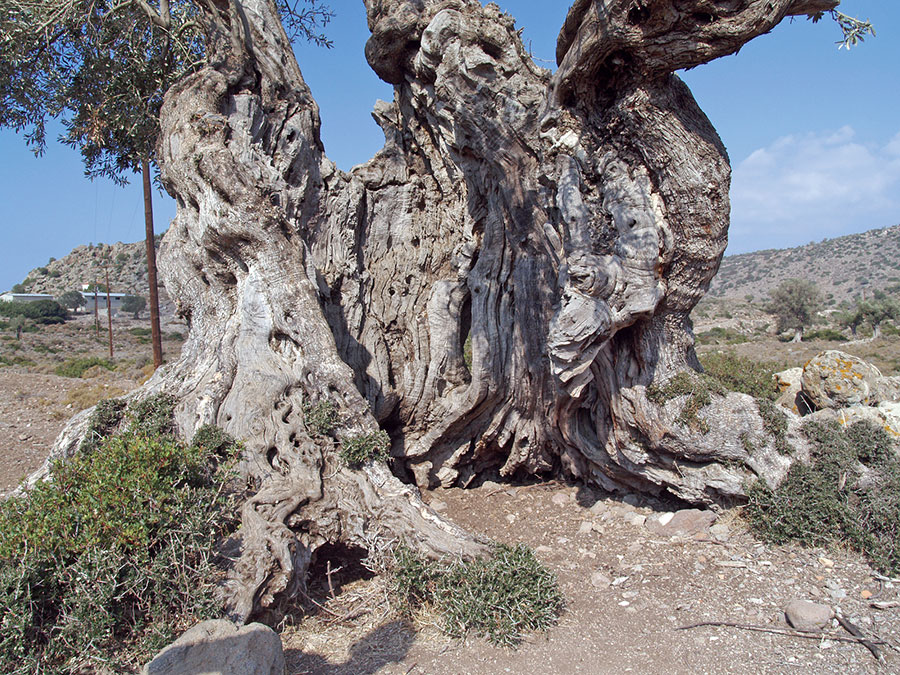
Access to Elaionas is mainly through a large dirt road that starts from the second beach of Marathon. Today, visitors will encounter many old olive trees with large trunks resembling natural works of art. According to the Institute of Materials Science and the Archaeometry Laboratory of the National Centre for Research of Natural Sciences ‘Democritus,’ these olive trees are very old. Measurements indicate that the surface of the trunk alone is over 400 years old.
The remaining olive trees are not numerous, but they serve as a testament to the extensive olive grove that once existed in this area. The valley of the olive grove has remained untouched by development, with only a few buildings scattered throughout the area. Visitors will come across three old chapels: Agia Kiriaki, Agia Triada, and Agios Georgios, as well as a built cistern for collecting rainwater from the surrounding hills and Mount Oros in particular.
The Holy Monastery of the Dormition of the Virgin Mary, ‘Chrysoleontisas,’ in Aegina
The Holy Monastery of the Dormition of the Virgin Mary, ‘Chrysoleontisas,’ in Aegina, is considered the patroness of Aegina. Its monastery, with the same name, was formerly male and is now female, and has been the most important monastery on the island for centuries.
According to tradition, the Holy Monastery of the Dormition of the Theotokos of Chrysoleontissa was originally built near the seaside village of Leonti, which made it vulnerable to repeated raids by pirates. After three successive destructions, it was decided to move the monastery to a location far from the sea, to prevent its visibility and easy accessibility to enemies.
The monastery was constructed in its new location around 1600-1614 AD. The Katholikon is designed in the style of a three-aisled basilica (1808) and is dedicated to the Assumption of the Virgin Mary, Agios Dionysios, and Agios Charalambos. The wood-carved iconostasis is impressive, featuring representations from the Old Testament, saints, angels, evangelists, and more. North of the Katholikon, the great tower of the monastery rises, having been rebuilt to protect it from pirates. The spiritual treasure of the monastery is the holy icon of Virgin Mary Chrysoleontissa, which is placed at the edge of the chancel towards the northern gate of the sanctuary. The miraculous icon of Panagia Chrysoleontissa attracts a large number of pilgrims.
The activity of the monastery during the revolution of 1821 was of great importance. During this period, the monastery was declared a Crusader and Patriarchal monastery. After the creation of the Free Greek State, the monastery was decreed by Otto to be preserved in operation, and the dissolved Holy Monastery of Faneromeni Salaminos was annexed to it as a metochi.
Thus, the monastery operated without interruption as a male monastery until 1935, the year in which it was converted into a female monastery. The monastery houses six chapels: the chapel of Saints Peter and Paul, Saint Athanasius, Saint Andrew the Apostle, Saint Leontius, Saint Magdalene (cemetery), and Saint Nektarios, for whom a special place has been dedicated, where the Saint of Aegina used to come to pray.
Today, the nuns take care of the hospitality of numerous pilgrims and are engaged in farming and animal husbandry.
The monastery of Panagia Chrysoleontissa celebrates on 15 August, when the biggest festival of the island takes place. It is located in the center of the island and is one to two kilometers away from the Holy Monastery of Agios Nektarios (Hesychastirio Aghia Triad). The beautiful route to the monastery provides an unforgettable experience for the visitor-pilgrim.
Aegina’s trails
Aegina is the ideal destination for those who enjoy hiking and exploring. Its mountainous hinterland combines the brilliance of the Attica light with an uninterrupted view of the sea and cultural monuments from the ages.
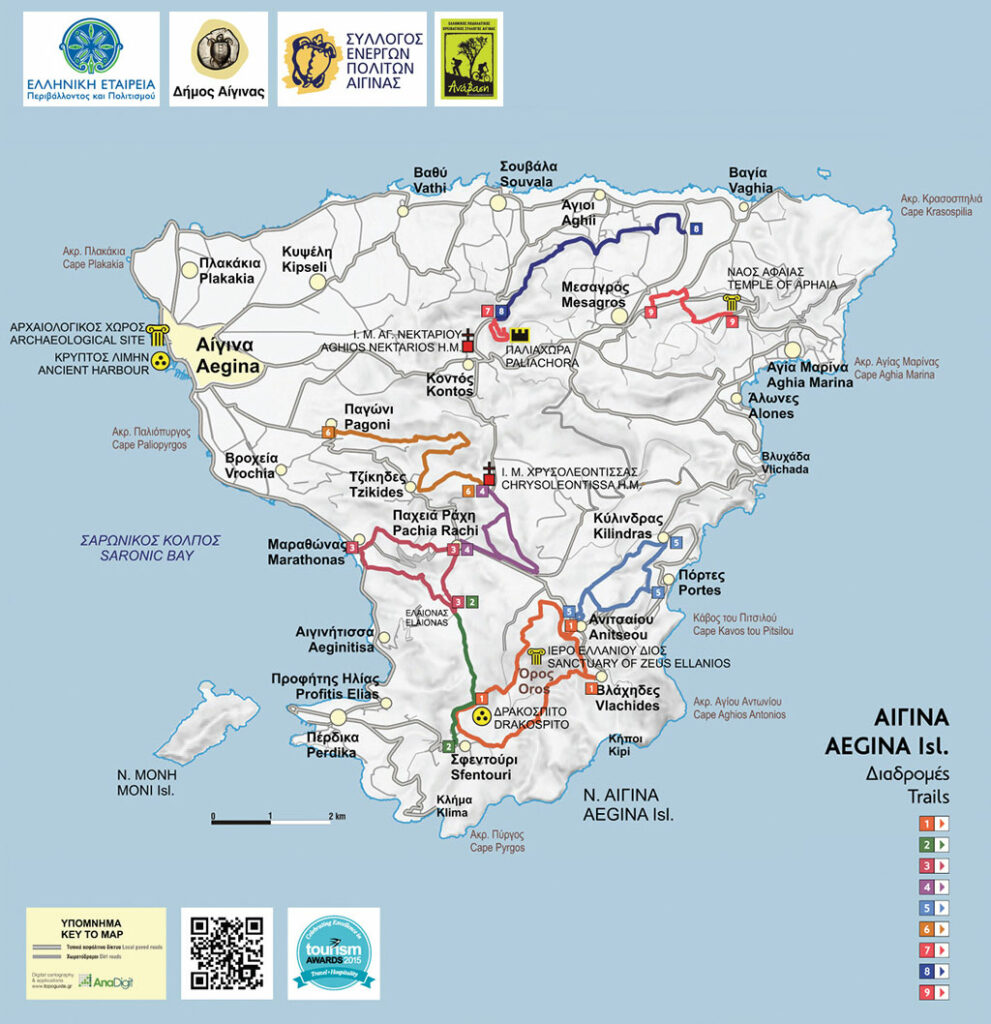
The Hellenic Society of Environment and Culture, in cooperation with the Municipality of Aegina, the Aegina Active Citizens’ Association and the “Anavasi” Greek Cycling and Mountaineering Club of Aegina, has implemented the “Paths of Culture” programme and marked 9 trails (to date; the project is ongoing), offering visitors the opportunity to explore and protect the magnificent natural landscape, special products and rich historical heritage. 1. Tour of Mount Hellanion 2. Sfentouri – Elaionas (ancient olive grove) 3. Ancient olive grove 4. Chrysoleontissa monastery 5. East Aegina 6. Mythical Asopos 7. Paliochora 8. Biking in the forest 9. Temple of Afaia.
You will find detailed information and the trail map at:
www.monopatiapolitismou.gr
www.energoi-aegina.gr
www.aegina.gr
Moni island
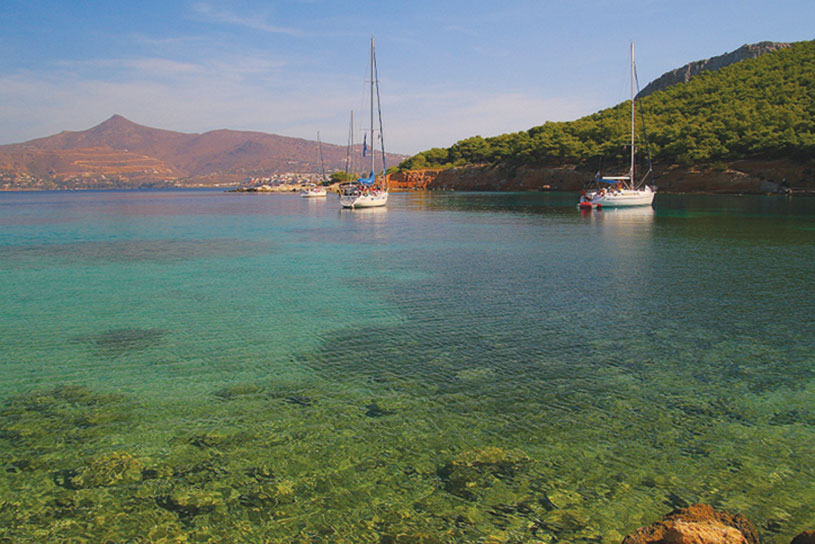
The small islet of Moni is 8 minutes by boat from Perdika. Most of Moni is thickly covered by pine trees. It is easily accessible and ideal for walking and exploring; Its permanent residents include deer, wild goats and peacocks, all of which are semi-tame. You will find calm waters and an organised beach with a snack bar as well as rocks with deeper waters a short walk to the west. You can go to Moni island from Aegina port or from Perdika by private boat.
Keep reading about Beaches on Aegina Island